Home/Sample Catalogue
What a catalogue actually looks like
Rather than describe the work, here is a real one. Ten donated artworks, photographed, measured, condition-reported, researched and priced against documented sales. Names and locations have been redacted. Everything else is exactly as it was delivered. As the catalogue itself states on every page, its values are indicative estimates from comparable-sales research, not formal appraisals.
This catalogue was produced for a charity retail partner whose donated stock was being priced by guesswork. Ten pieces came out of the back room. One of them had been sitting on the floor at $1,700 with no buyer, and the research showed why.
Every entry does three jobs
A catalogue that only lists what you own is an inventory. What makes it useful is that each entry records the object, explains it, and then justifies a number you can actually stand behind.
The object, recorded
Multi-angle photographs of the front, the back, the signature and the labels. Measurements taken by tape, not estimated. Condition described honestly, including the losses and the foxing. This is the part that survives a dispute.
The research
Who made it, when, and what the marks mean. A canvas stamp traced to a manufacturer in Cluj. A signature whose J merges into the R. An artist's exhibition history reconstructed from library records. Where a name cannot be established, the entry says so plainly.
The number, evidenced
Every figure is tied to named evidence: comparable sales with the house, the price and the date where they exist, and a plain statement of the limits where they do not. Recorded sales are kept separate from asking prices. Two values are given: a researched market range, and a realistic asking price. No figure appears without something behind it.
The $1,700 piece turned out to be a genuine 1890s New Zealand colonial oil by a listed painter, correctly attributed but priced against a single record outlier. The artist's auction record, around thirty-four works offered since 1974 and most of them sold, put it at $300 to $700. Recommended asking price $475, evidence attached.
Three pages, as delivered
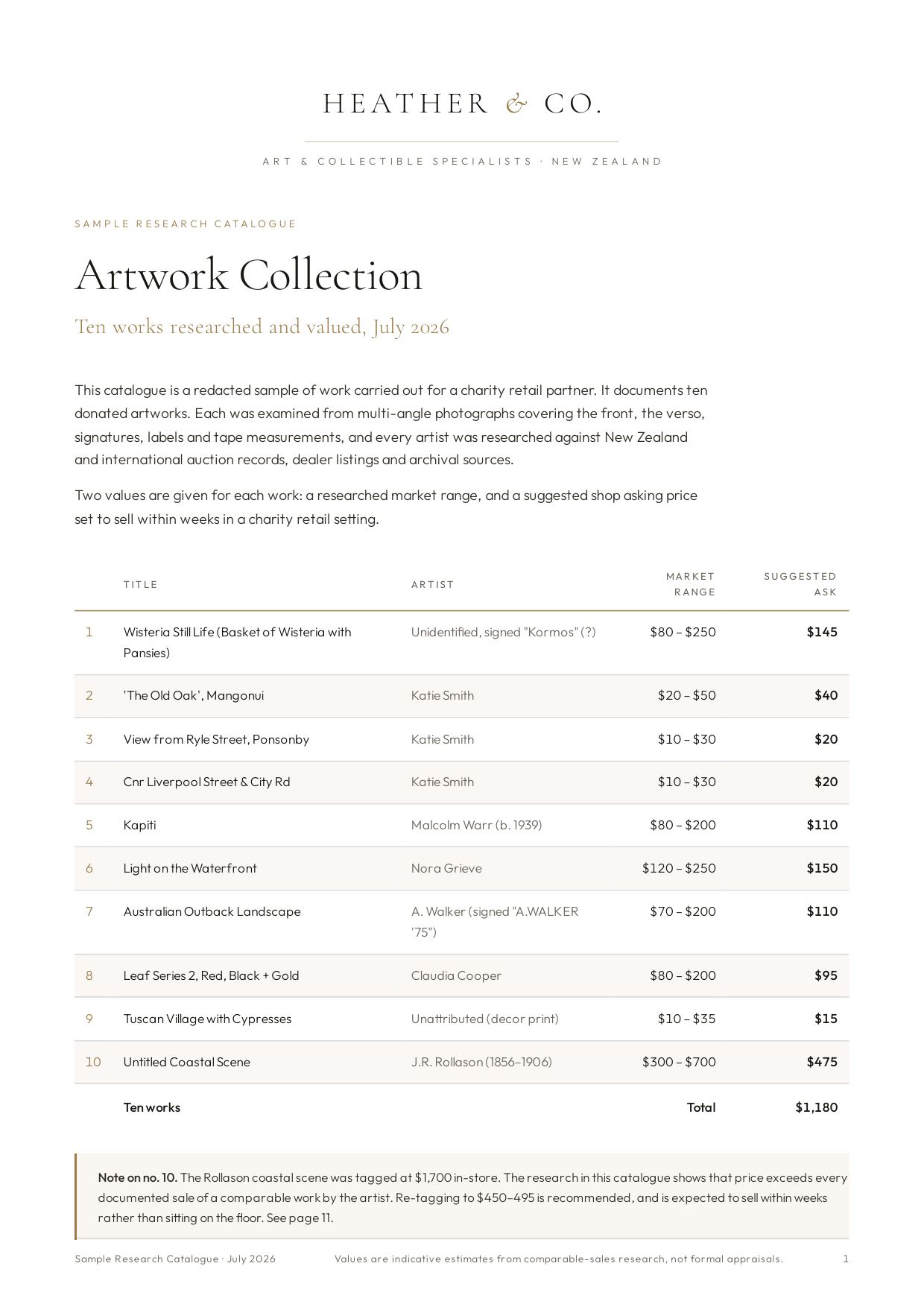
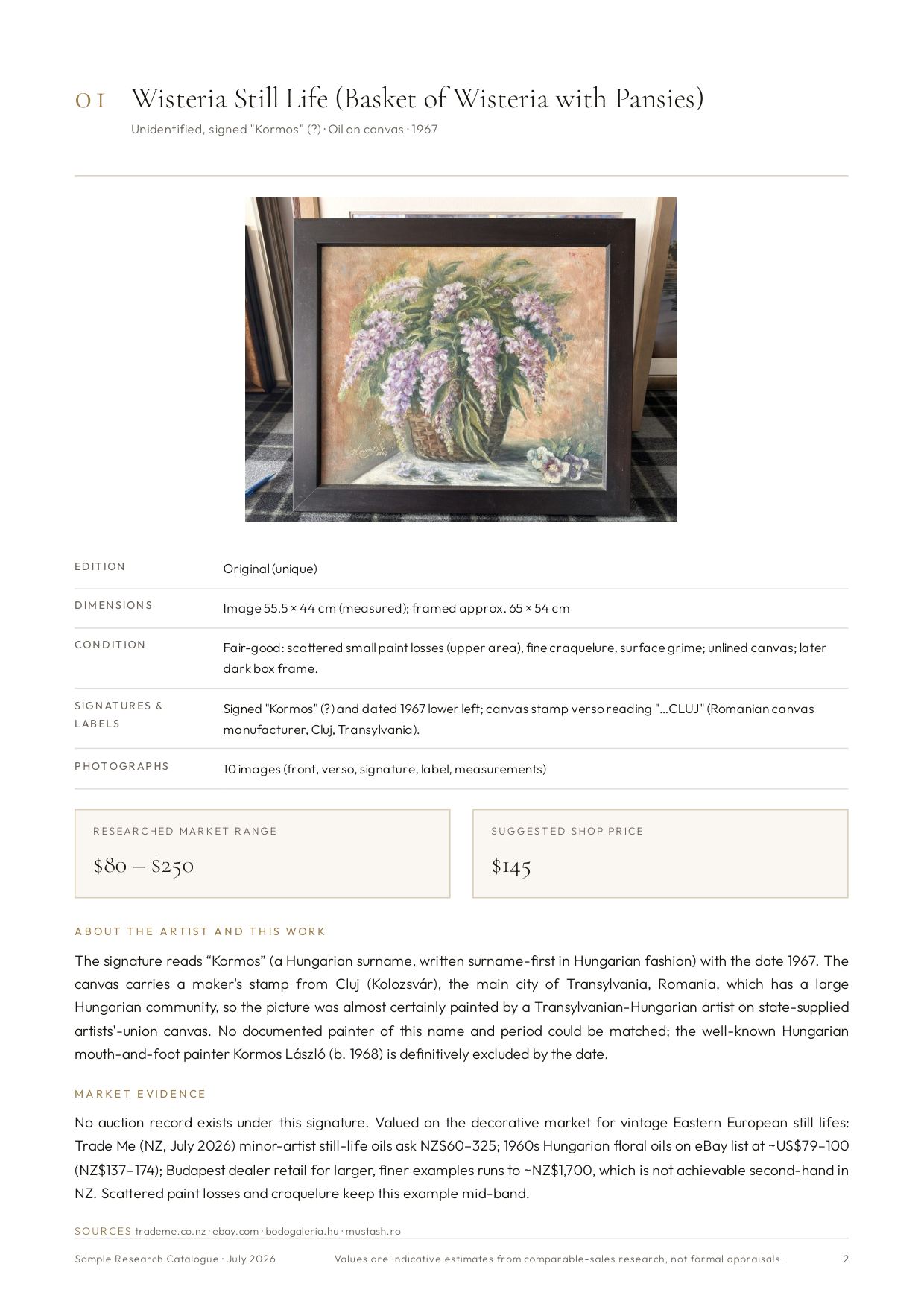
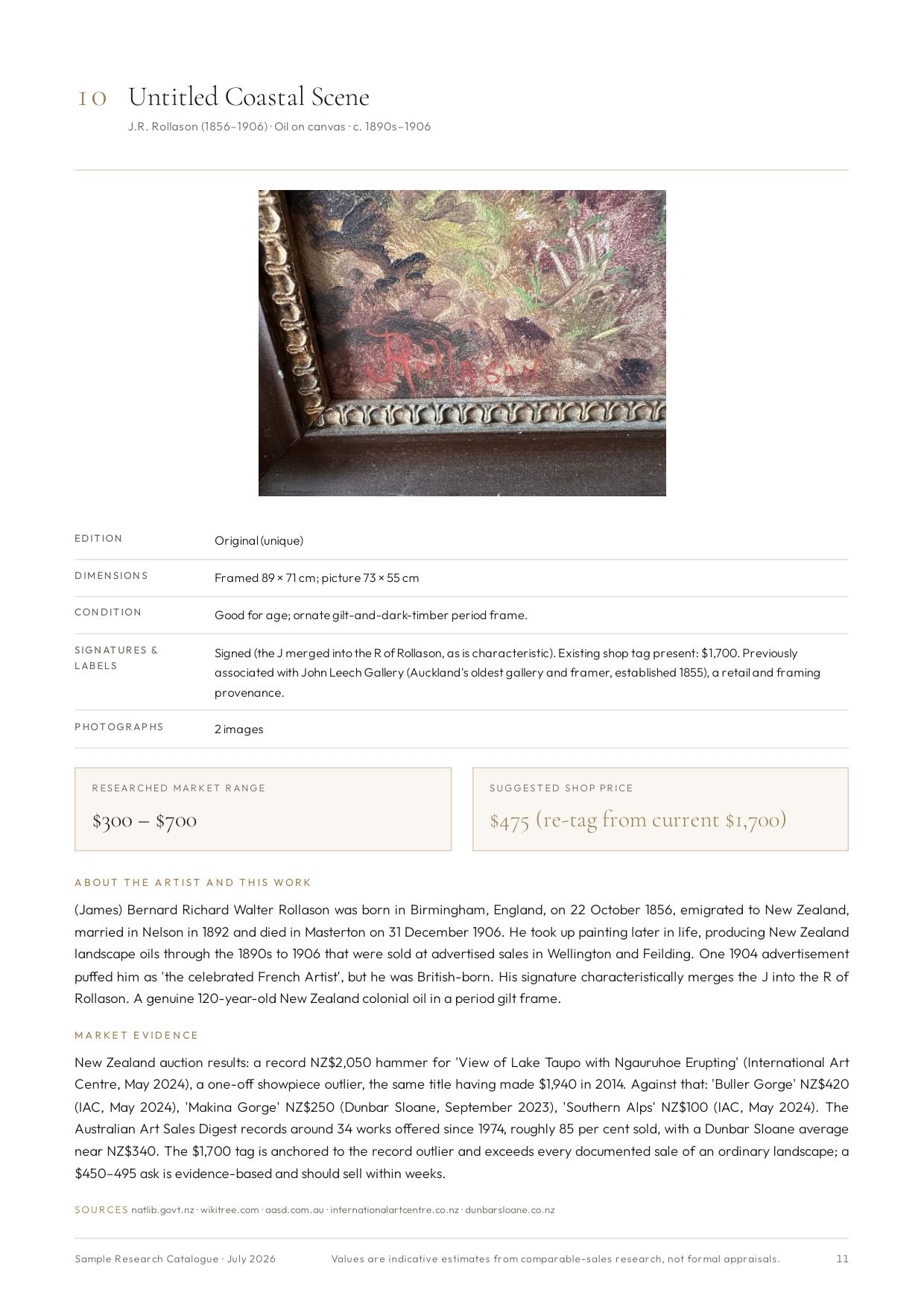
The whole thing, eleven pages
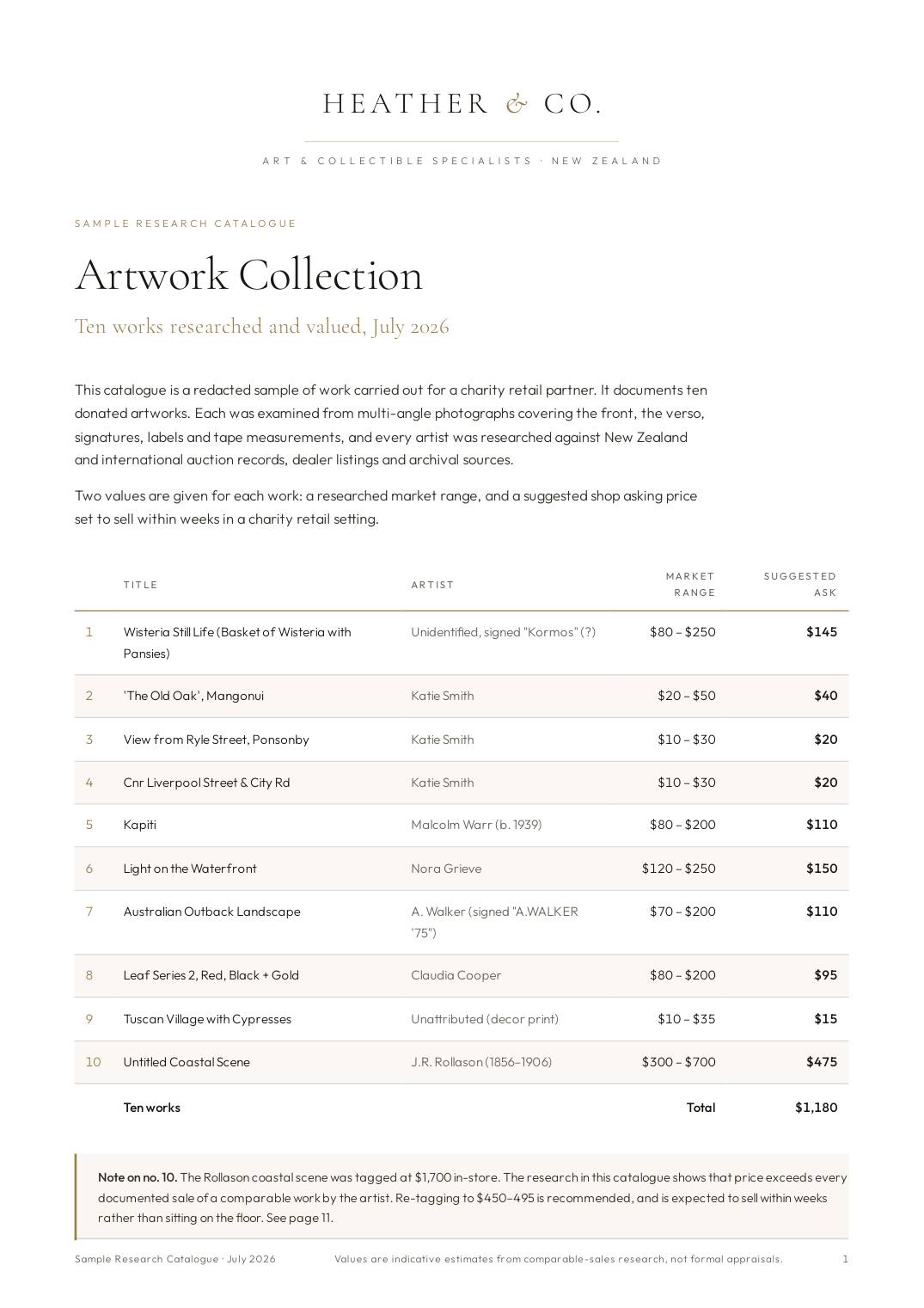
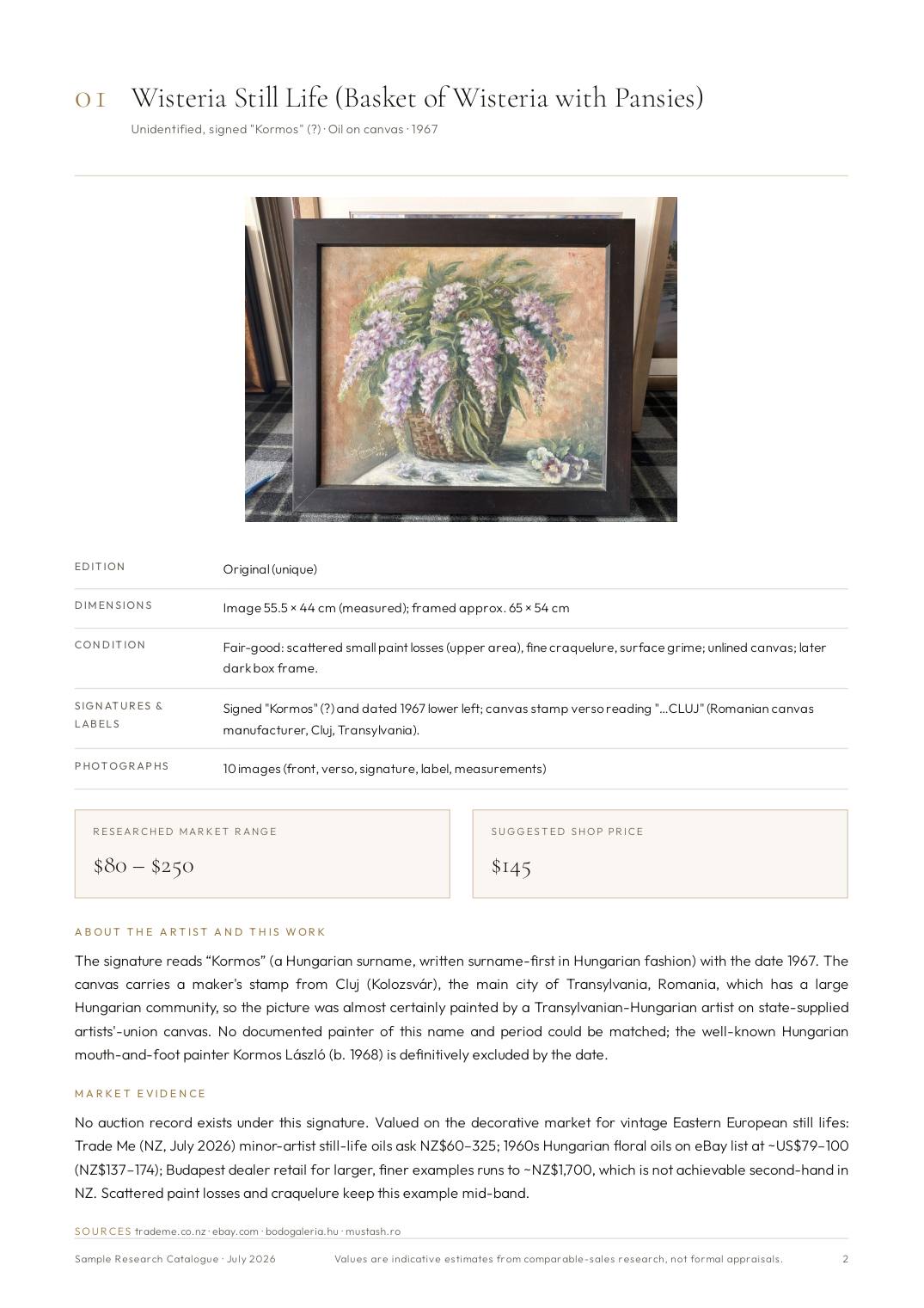
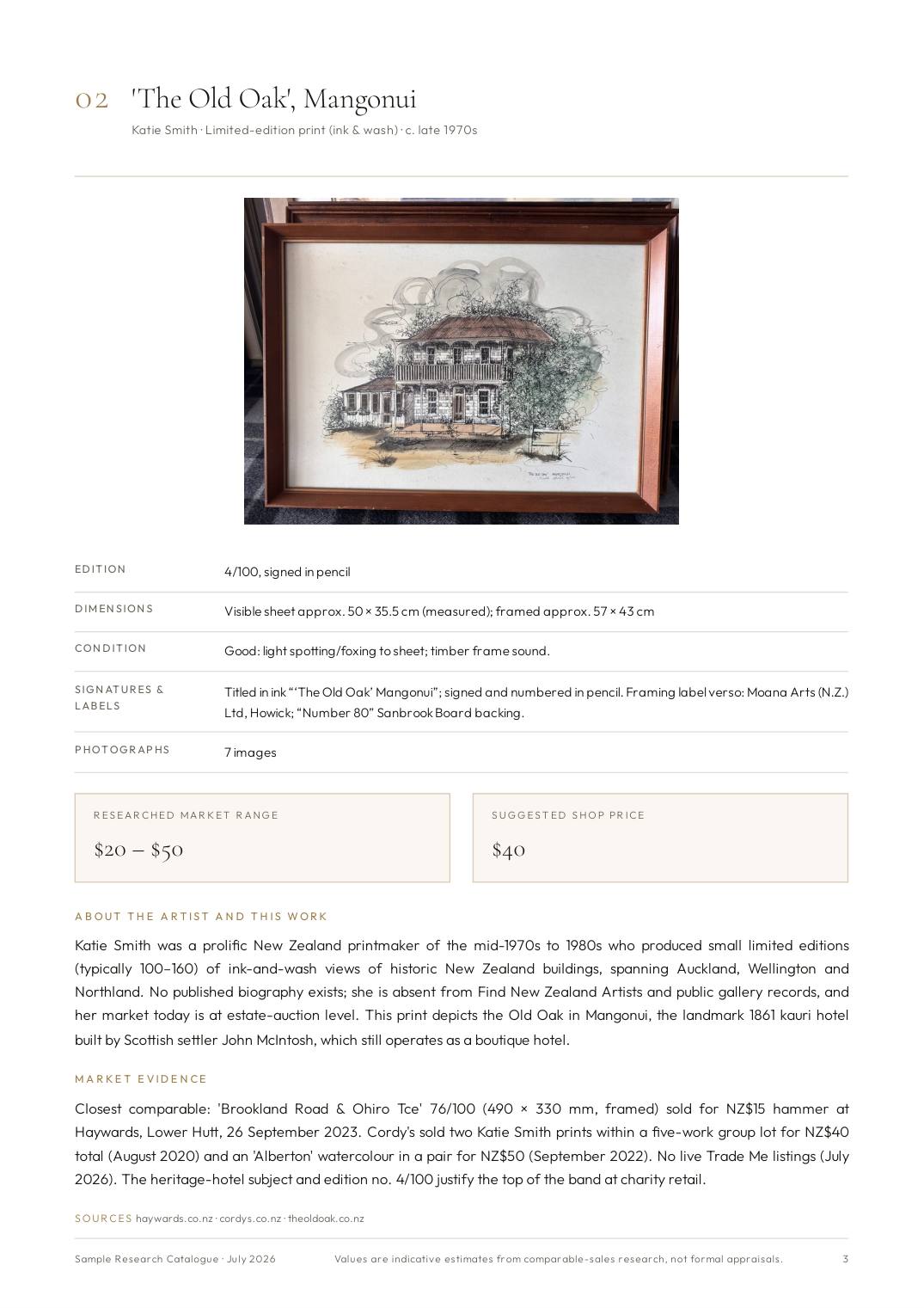
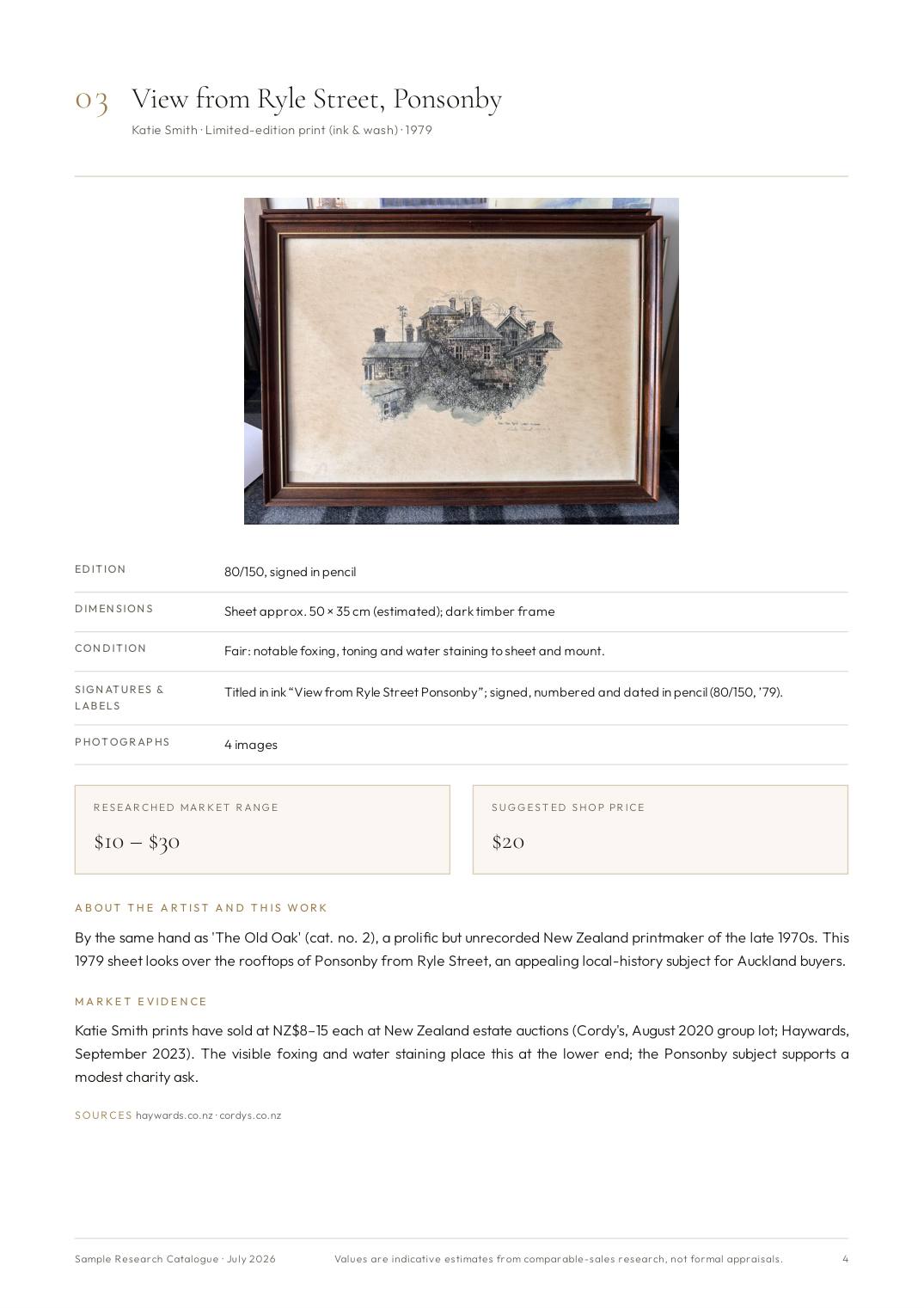
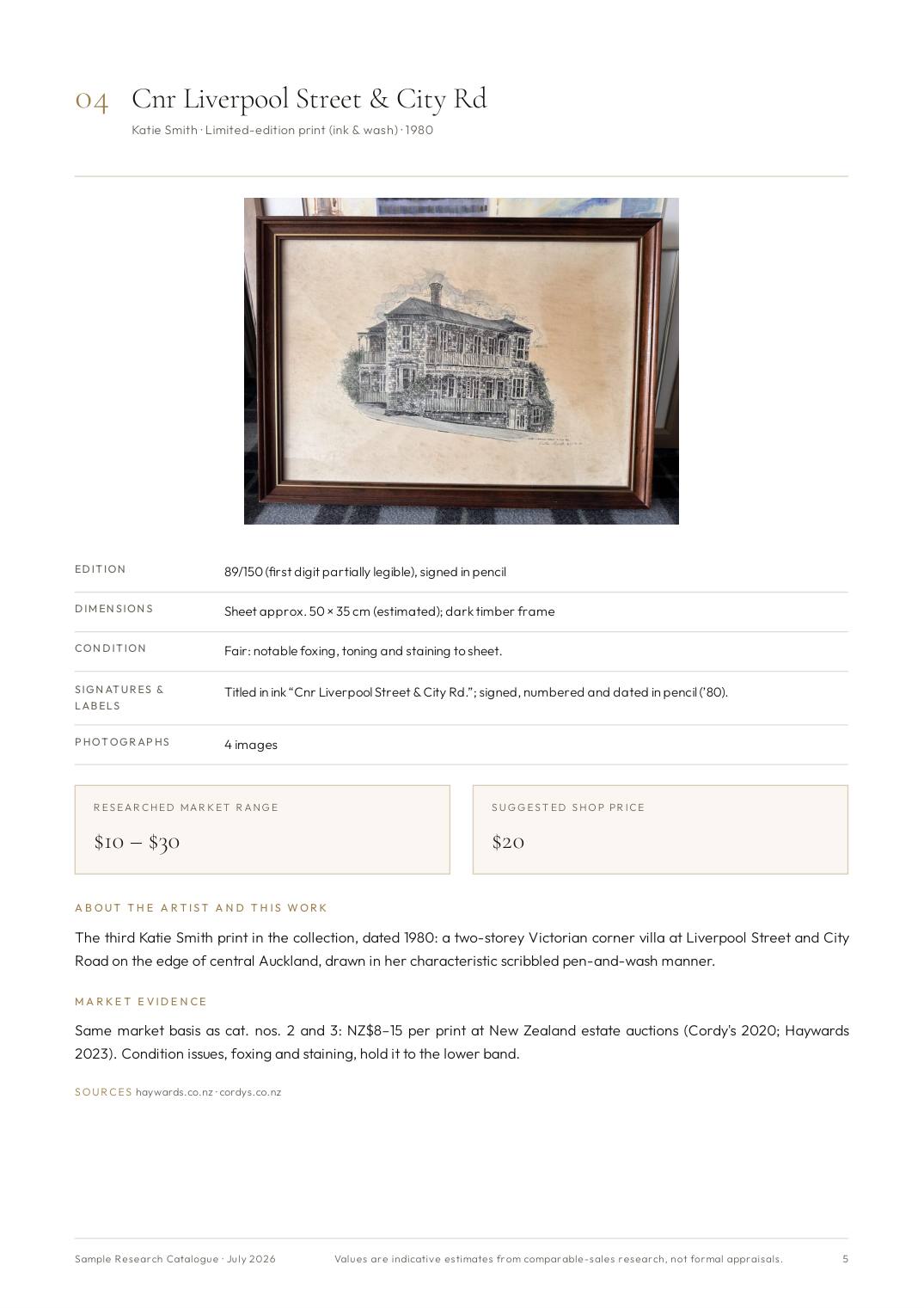
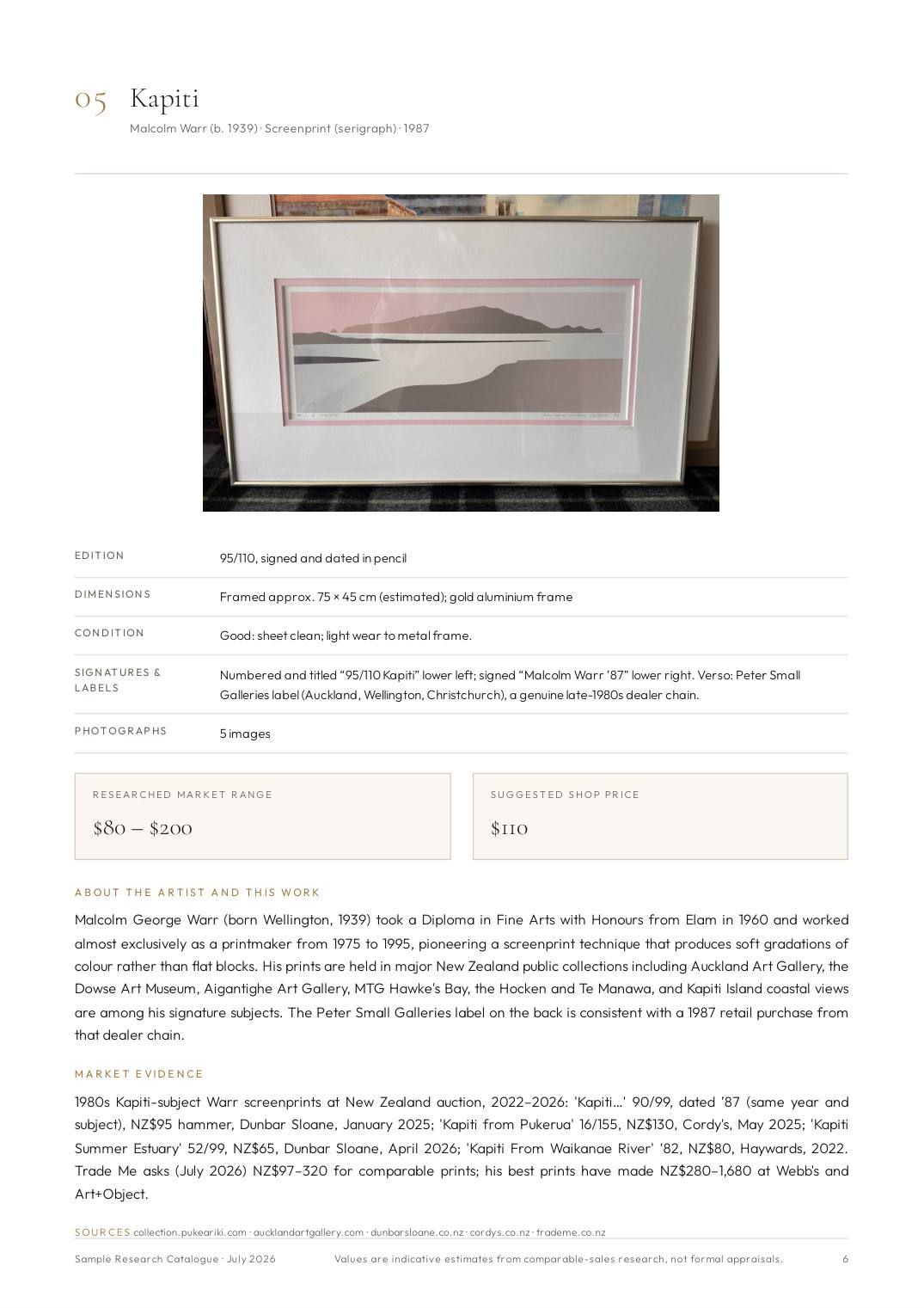
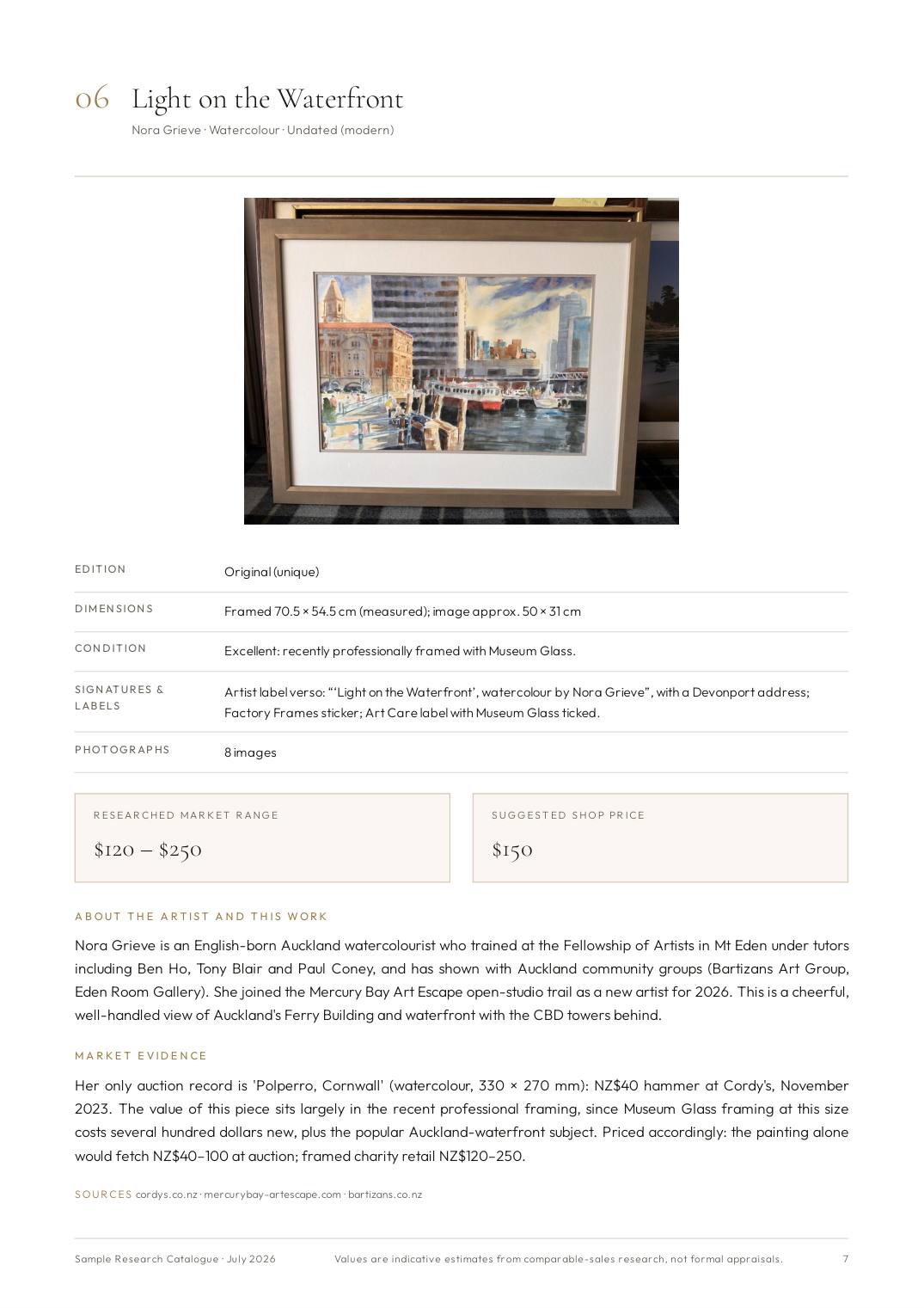
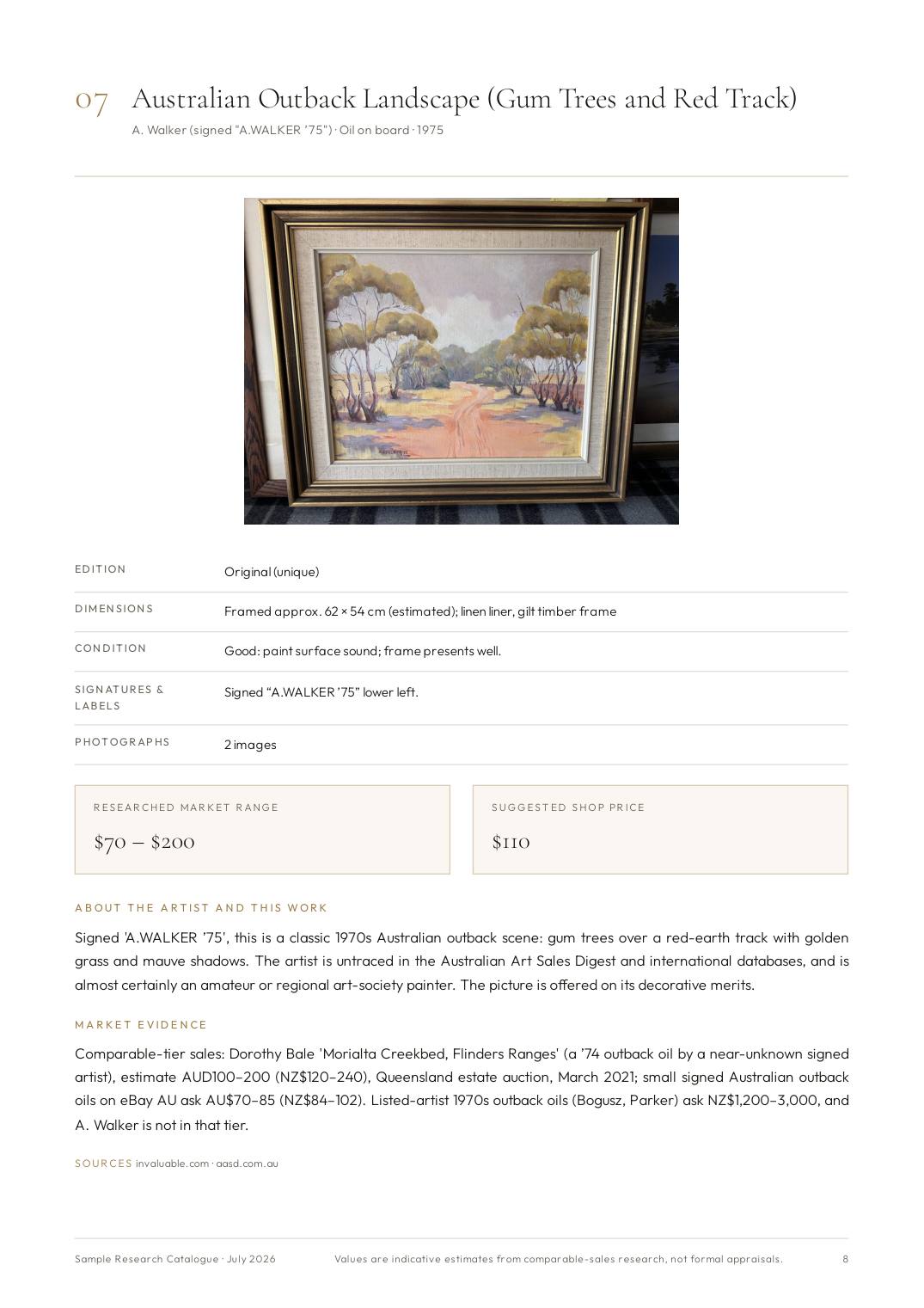
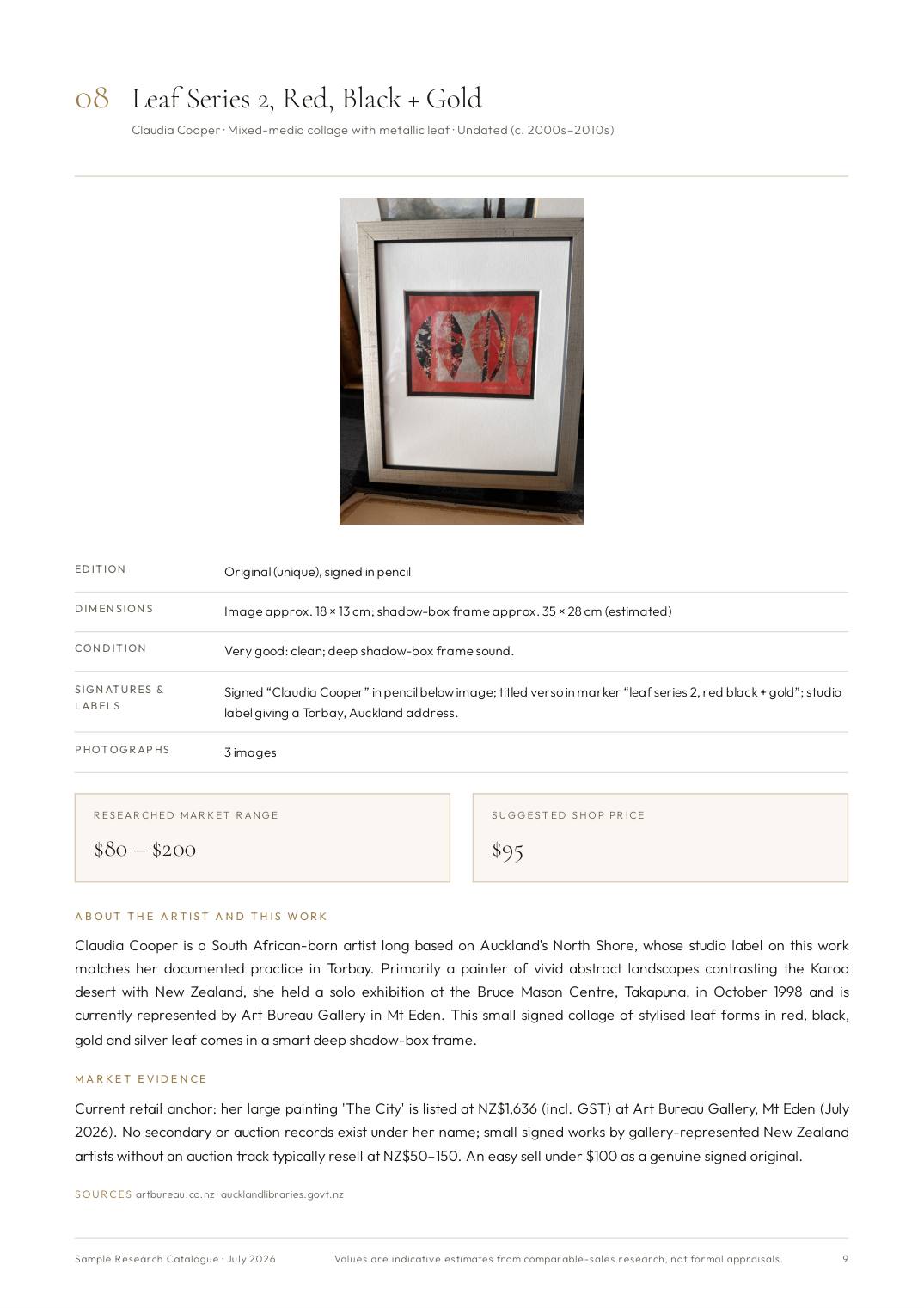
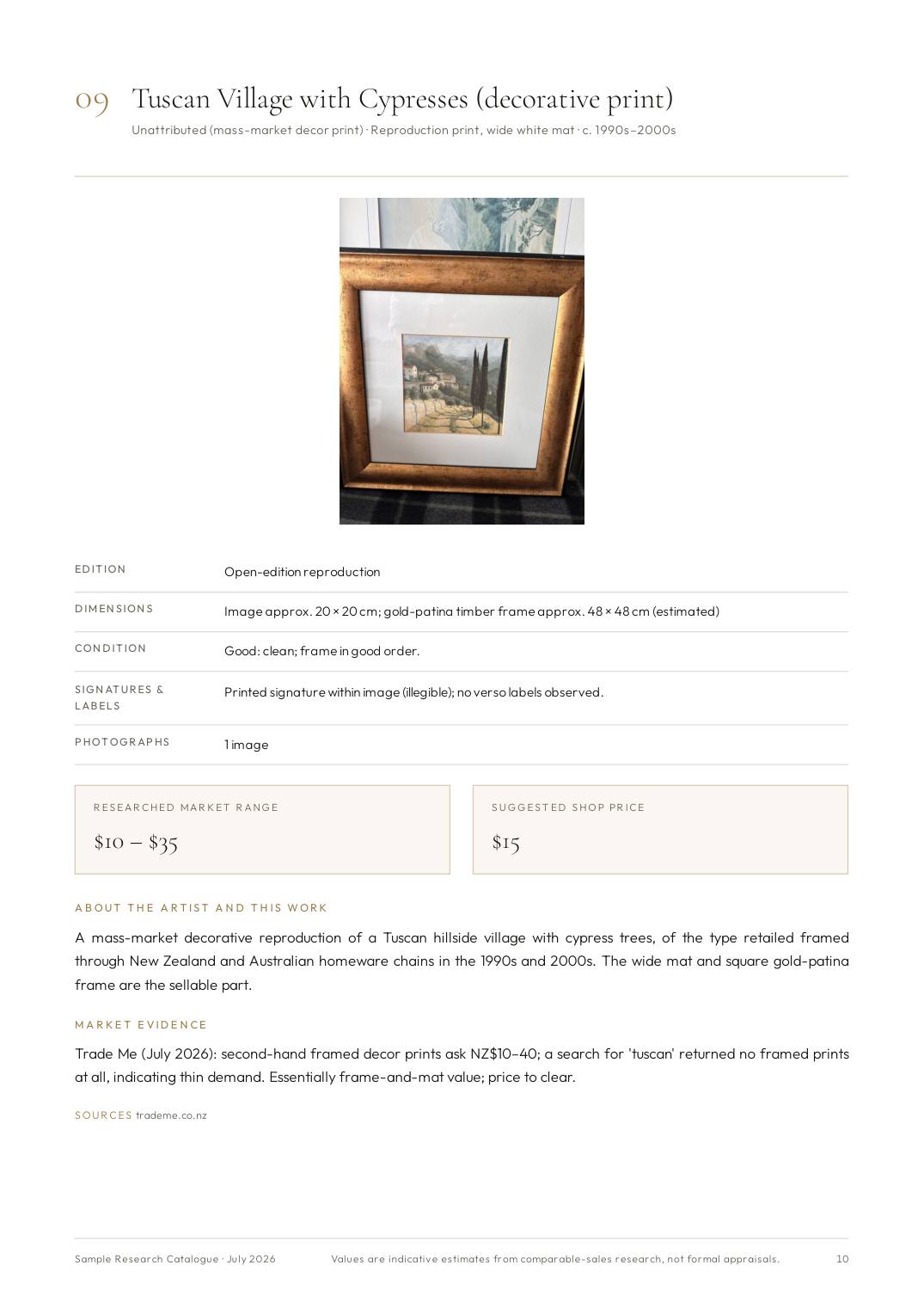
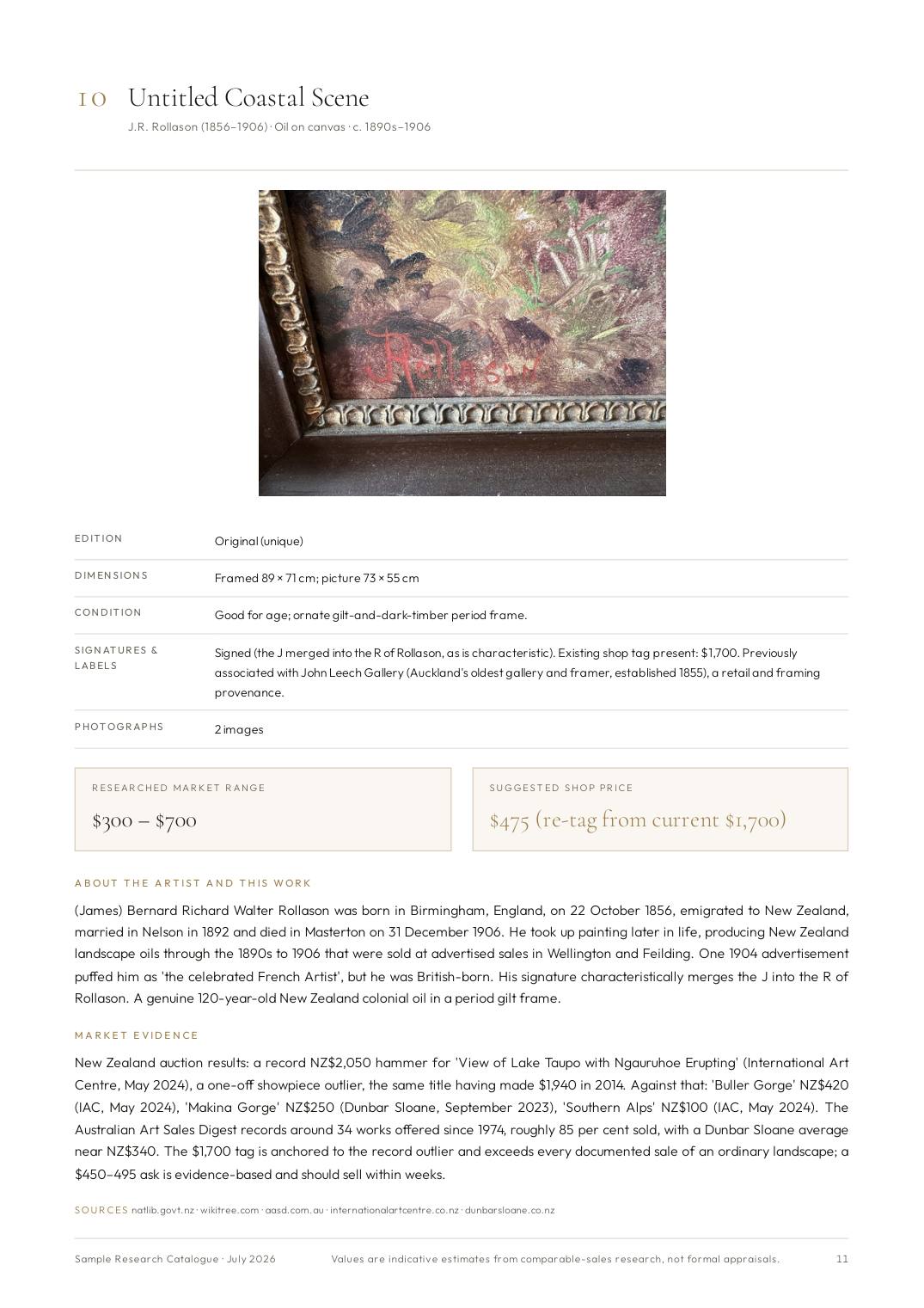
Download the PDF · 11 pages · 1.8 MB · Free to share
Donated stock, priced properly
This catalogue was produced for a charity retailer, and that is work we actively want more of. Op shops and hospice shops receive art, prints and collectibles every week and have to price them by guesswork; a proper read on the few pieces that matter can be the difference between a $20 sticker and a $2,000 sale. If you run a charity shop, send us a photo of anything you are unsure about and we will tell you honestly whether it is worth a second look.
The services behind it
Try it with one item
Photograph anything you are unsure about and email it over. We will come back with an honest first read on what it looks like and whether it is worth investigating properly, at no charge. A full written valuation with comparable sales evidence behind it is quoted as a fixed fee before we start.